

 Employers have been using cameras and video surveillance in the workplace for many years. In fact, in a 2005 survey, over half of the responding companies indicated they used video surveillance to counteract theft, violence, or sabotage. 16% of those respondents used surveillance to monitor their workers’ performance.
Still others were monitoring their employees to help prevent workers’ compensation fraud—something that could pay dividends for their companies in terms of payouts and workers compensation insurance rates.
Staging a workers comp injury caught on video
A California workers’ comp insurer had three cases in 18 months where workers’ comp fraud was proven because of videos that showed the workers staging their injuries. The videos—two from restaurant kitchens and the other in a warehouse--show the workers rearranging furniture and objects, kicking the objects, then screaming out in pain. They were subsequently taken away in an ambulance.
The videos were proof that the injuries were faked, and after an investigation, criminal complaints were filed and convictions resulted in a matter of months. There was no impact on the company’s experience rating, or a corresponding premium increase, because the cases were handled quickly, and fraud was easily proved.
Caution: Employers must respect the laws on workplace privacy
If employers want to use video cameras to monitor employees, they must have a legitimate business reason to do so. State privacy laws will usually determine the extent at which video monitoring is considered legitimate and lawful. Yet, cameras that also record sound may be in conflict with federal wiretapping laws, with or without an otherwise legitimate reason. Most laws that limit surveillance in the workplace pertain to those areas in which there is a reasonable expectation of privacy—restrooms and break rooms, for instance. Some states also prohibit the use of two-way mirrors in restrooms, locker rooms, and similar locations.
Once a company has ascertained a legitimate need to use video monitoring, employees must be notified of the cameras, and filming must be confined to public areas. Under these conditions, the surveillance is likely to be upheld by the court. But since filming can involve privacy rights, it is critical that employers not cross the line.
Certain employee activities remain private
Other activities may also be off-limits for employer surveillance. The National Labor Relations Act (NLRB) prohibits employers from using video cameras to monitor employees' union activities, including union meetings and conversations involving union matters. Employers are required to bargain with union employees before using video surveillance in the workplace. Also, video surveillance may not be used in a manner that is meant to intimidate current or prospective union members.
Some employees have challenged employer surveillance of their activities while on leave for a medical condition or workers' compensation injury. The courts sided with the employer and denied the challenges in cases that involved clear employee abuse of leave laws. (One employee took FMLA leave to vacation in Las Vegas, while another was caught on camera working out at a gym after claiming he was too injured to work). Aside from these flagrant examples, courts would likely rule differently if an employer's surveillance drifted into private activities and effectively deterred employees with a legitimate need from exercising their legal rights.
Workplace video surveillance guidelines
Employers use video cameras to monitor employees for a host of reasons, all of which could save their businesses money. But it is important to do it lawfully. Here are some general guidelines:
- Make sure you have a legitimate reason to use surveillance
- Do so only in public areas
- Inform your employees that you have cameras in the workplace
- Do not record their conversations
- Refrain from taping union activity
Consider speaking with a labor lawyer in your area if you have additional questions or concerns. To find out more about your state's workplace privacy laws, contact your state labor department.
Lower Your Workers Compensation Insurance Costs
 For more information about workers compensation insurance, contact American Insuring Group online or call us at (800) 947-1270 or (610) 775-3848.
Our independent insurance agents will help you find the best policy to meet your needs, and do it at the right price. As an independent agency, we're free to shop among many competing insurance carriers, and to provide you with the best deal on quality workers comp insurance.
Call or click today to get started!
 Opioid use and misuse by workers has become a major concern for employers and their workers’ compensation managers.
 Imagine: you’ve just finished one of the most successful sales in your store’s history. As you’re closing and preparing to take your receipts to the bank for deposit, an armed robber confronts you and leaves with all of your cash. All of your hard work and thousands of dollars leave with him.
 Problems can occur when workers covered by Medicare Advantage Plans sustain workers compensation injuries and use the plan to pay for medical care.
  We Can Help
 Return-To-Work programs are instrumental in enticing employees out on a workers’ compensation claim to come back to work. Many employers struggle to manage and fill the void that is left behind when a worker is out; however, a solid Return-To-Work program will encourage employees to return to work quickly (once they are cleared to do so by a medical professional of-course), thereby contributing to lower
 We'll Help You Save on Workers Compensation Insurance
 Hearing loss may be a compensable work injury leading to increased
  Over 4,000 employees are injured, and another 325 die each year in workplace electrical accidents. Do not let this be one of your employees! Protect your employees and minimize your workers compensation insurance costs through proper safety procedures.
 A recent national survey of small businesses yielded some sobering statistics. It found that 66 percent of these businesses do not have business interruption insurance—even though an estimated 25 percent of them will not be able to reopen following a major loss, such as a fire, a break-in, or a storm.
 Employees who are injured on the job may be entitled to compensation for medical care and wage replacement through their employer’s
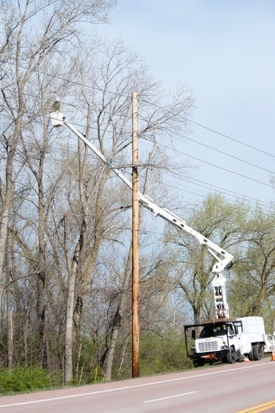 The storm was ferocious. Luckily, your buildings were spared damage from the high winds and heavy rains; however, a few miles away the storm brought down power lines that supply your business with electricity. While there is no physical damage to your property, you’re still out of business without power. Does your