


Workers' compensation insurance pays medical bills and partial lost wages for employees hurt on the job, and in Pennsylvania it is mandatory for most employers from an employee's first day of work. In return, it generally protects the business from being sued by the injured worker. Premiums are based on payroll, job classification and your claims history.
Every employer in Pennsylvania eventually deals with a workplace injury, and workers' compensation is the system that decides what happens next. The scale is larger than many business owners expect. According to the U.S. Bureau of Labor Statistics, private industry employers reported 2.5 million nonfatal workplace injuries and illnesses in 2024. Each of those cases involved medical care, time away from work or both, and for an uninsured employer any one of them could become a lawsuit.
This guide explains what workers' comp pays for, who must carry it under Pennsylvania law, how premiums are calculated, what happens after an injury and how employers in Reading, Berks County and across the state can keep coverage affordable. It is written for owners, office managers and HR staff who want a clear picture before their next renewal.
What does workers' compensation insurance pay for?
Workers' compensation pays for an injured employee's reasonable and necessary medical treatment, a portion of lost wages while they cannot work, and benefits for permanent injuries or death. It pays regardless of who was at fault, and in exchange the employee generally cannot sue the employer over the injury.
Medical benefits cover care related to the work injury, including physician visits, hospital care, surgery, prescriptions and physical therapy. Wage-loss benefits replace part of the employee's income. The Pennsylvania Department of Labor and Industry explains that workers' compensation pays approximately two-thirds of a worker's wages for total disability, up to a maximum set by law, once the disability lasts longer than seven days.
That maximum is tied to the statewide average weekly wage. For injuries on or after January 1, 2026, Pennsylvania's maximum weekly compensation rate is $1,394, up from $1,347 in 2025. Benefits can also include specific loss payments for the loss of use of a body part, disfigurement awards and death benefits for dependents.
The trade-off at the heart of the system is often called the exclusive remedy. Employees receive guaranteed benefits without having to prove fault, and employers receive broad protection from injury lawsuits by their own workers.
Who Must Carry Workers' Comp in Pennsylvania
Nearly every Pennsylvania employer with at least one employee must carry workers' compensation, whether that employee is full-time, part-time or seasonal. Coverage must be in place from the first day of employment, not after a probationary period.
The Pennsylvania Department of Labor and Industry states plainly that coverage is mandatory for most employers under state law. There is no minimum headcount and no payroll threshold that lets a small business skip it. A corner restaurant with two part-time cooks has the same basic obligation as a manufacturer with two hundred employees.
The consequences of going without are serious. An uninsured employer can be sued directly by an injured worker, losing the exclusive remedy protection that insured employers enjoy. The state can also pursue criminal prosecution, which the Department of Labor and Industry warns can bring imprisonment and substantial fines for each day of noncompliance. For most businesses, a single serious injury would cost far more than years of premiums.
Out-of-state employers need to plan for this, too. A business headquartered in New Jersey or Maryland that sends workers into Pennsylvania should confirm that its policy lists Pennsylvania as a covered state, either directly or through other-states coverage.
Exemptions and Special Cases
A small number of workers fall outside the mandatory rule. Pennsylvania allows exemptions for certain corporate executive officers, members of certain religious groups and some domestic and agricultural workers, and sole proprietors and partners are not required to cover themselves. Misclassified independent contractors, however, are not exempt.
According to the Department of Labor and Industry, exemptions include workers covered by other compensation acts, such as federal employees and railroad workers; domestic workers, for whom coverage is optional; agricultural workers who work fewer than 30 days or earn less than $1,200 in a year from one employer; and certain employees exempted for religious beliefs or executive status in certain corporations. Executive officer exemptions must be requested from and granted by the Department; a title on a business card is not enough.
Under the Department's employer guidance, sole proprietors and general partners are not required to insure themselves. Many choose to anyway, because without coverage they have no wage replacement if they are hurt, and because some customers and general contractors refuse to hire uninsured businesses.
Independent contractors are the most common trouble spot. Labeling a worker a 1099 contractor does not make them one. If the business controls how, when and where the work is done, the worker may be treated as an employee for workers' comp purposes, and the premium auditor will charge for that payroll. Construction firms face this issue constantly, which is why our contractor insurance guide covers subcontractor certificates in detail.
Where can Pennsylvania employers buy workers' comp?
Pennsylvania employers can buy workers' compensation from a private insurance carrier licensed in the state, from the State Workers' Insurance Fund (SWIF), or, for large and financially strong employers, through state-approved self-insurance. Many small and mid-size businesses buy from private carriers through an agent.
Private carriers licensed in Pennsylvania compete for this business, and many offer the coverage alongside general liability, commercial auto and property policies, which can simplify billing and claims. Pricing and underwriting appetite vary by carrier and by industry, so the same business can receive meaningfully different quotes.
SWIF is a state-run insurer that writes coverage for Pennsylvania employers and is often used by businesses that have trouble finding it in the private market. It must follow the same benefit rules as private carriers, but its pricing and service model differ.
Self-insurance is an option only for large employers that apply to the Bureau of Workers' Compensation and meet its financial criteria. It is rarely practical for a small business.
An independent agent can compare private carriers and SWIF side by side. Our post on the role of insurance brokers in workers' compensation explains what a broker does beyond the initial quote.
How Workers' Comp Premiums Are Calculated
A workers' comp premium starts with payroll. Each employee's pay is assigned to a classification code, each code has a rate per $100 of payroll, and the result is adjusted by your experience modification factor and any credits or surcharges. Riskier work carries higher rates.
In Pennsylvania, classification codes and the underlying loss costs are developed by the Pennsylvania Compensation Rating Bureau (PCRB), which also administers experience rating. Insurance carriers build their rates from those loss costs, which is why the same class code can be priced differently by different carriers.
The basic formula looks like this: payroll divided by 100, multiplied by the class rate, multiplied by the experience mod. A roofing crew might carry a class rate many times higher than clerical office staff, so a business with both must make sure each employee's payroll lands in the correct class. Office payroll rated at a field rate is an expensive and avoidable mistake.
Several other factors can adjust the final premium, including deductible options, schedule credits for strong safety programs, premium discounts for larger accounts and the Pennsylvania certified safety committee credit for employers with a qualifying safety committee.
Your Experience Mod and Why Claims History Matters
Your experience modification factor compares your company's actual claims to what is expected for a business of your size and type. A mod below 1.00 lowers your premium, and a mod above 1.00 raises it. For many employers, it is the single most powerful long-term cost lever.
The mod rewards businesses that keep injuries rare and mild. Claim frequency tends to affect the mod more than a single larger claim, which means a pattern of small, preventable injuries can be more damaging than one serious accident. That is a strong reason to invest in safety and to manage every claim actively.
We cover the mechanics in depth in our post on how the workers' comp experience mod affects your premiums, including how the factor is calculated and how businesses can bring it down.
For a growing business, it helps to know that a mod is not permanent. As older claim years roll out of the calculation and newer, cleaner years roll in, the mod can improve steadily, and that improvement shows up directly in your premium.
What Workers' Comp Does Not Cover
Workers' compensation covers injuries and illnesses that arise out of and in the course of employment. It generally does not cover injuries to customers or the public, ordinary commuting to and from work, injuries caused by intoxication or intentional self-harm, or claims that belong under other policies.
Injuries to people who are not your employees, such as a customer who slips in your store or a visitor hurt on your jobsite, fall under general liability insurance, not workers' comp. Damage to your property or vehicles belongs under property and commercial auto policies.
Most standard Pennsylvania policies include a second part called employers' liability. It responds in the less common situations where an employee or a third party can still bring a lawsuit related to a workplace injury, such as a claim by a family member or a third-party-over action. The limits on that part of the policy are worth reviewing at renewal, especially for businesses that work under contracts requiring specific employers' liability limits.
Coverage disputes often turn on whether an injury was really work-related. Clear job descriptions, documented work hours and a timely incident report make those questions far easier to answer for everyone involved.
The Annual Premium Audit
Your workers' comp premium is an estimate until the policy year ends. At that point the carrier audits your actual payroll and classifications, and you either receive a refund or owe additional premium. Clean records make the audit faster and fairer.
Because the original premium is based on projected payroll, a business that grows during the year will usually owe more at audit, and a business that shrinks may receive money back. The audit also checks whether payroll was assigned to the right class codes and whether subcontractors carried their own coverage.
Good preparation keeps audits from turning into surprises. Keep payroll records organized by job class, track overtime separately where your carrier allows the premium portion to be excluded, and collect current certificates of insurance from every subcontractor before they start work. Report significant payroll changes to your agent during the year rather than waiting for the auditor to find them.
If an audit result looks wrong, you have the right to question it. Misclassified payroll and uncounted subcontractor certificates are common errors, and a well-documented dispute often corrects them.
What happens when an employee gets hurt on the job?
When an employee is injured, they should report it to the employer as soon as possible, the employer should notify its insurance carrier right away, and the carrier then investigates and pays benefits on accepted claims. Fast reporting helps the worker and keeps claim costs down.
Pennsylvania gives injured employees a window to report an injury, but waiting rarely helps anyone. Late reports make investigations harder, delay benefits and tend to produce larger claims. Employers should have a simple written process: who the employee tells, who fills out the first report of injury and who contacts the carrier. Our page on workers' compensation insurance from American Insuring Group explains how the coverage and its employer's liability protection work.
The Department of Labor and Industry explains that employers may post a list of at least six designated health care providers. When the list is properly posted and acknowledged, injured employees generally treat with one of those providers for 90 days from their first treatment. Employers who want to use this option should confirm the posting and notice requirements with their carrier.
Return-to-work programs are one of the most effective tools after an injury. Offering modified or light-duty work when the doctor allows it keeps the employee connected to the workplace and can reduce wage-loss costs considerably.
Reducing Claims Through Workplace Safety
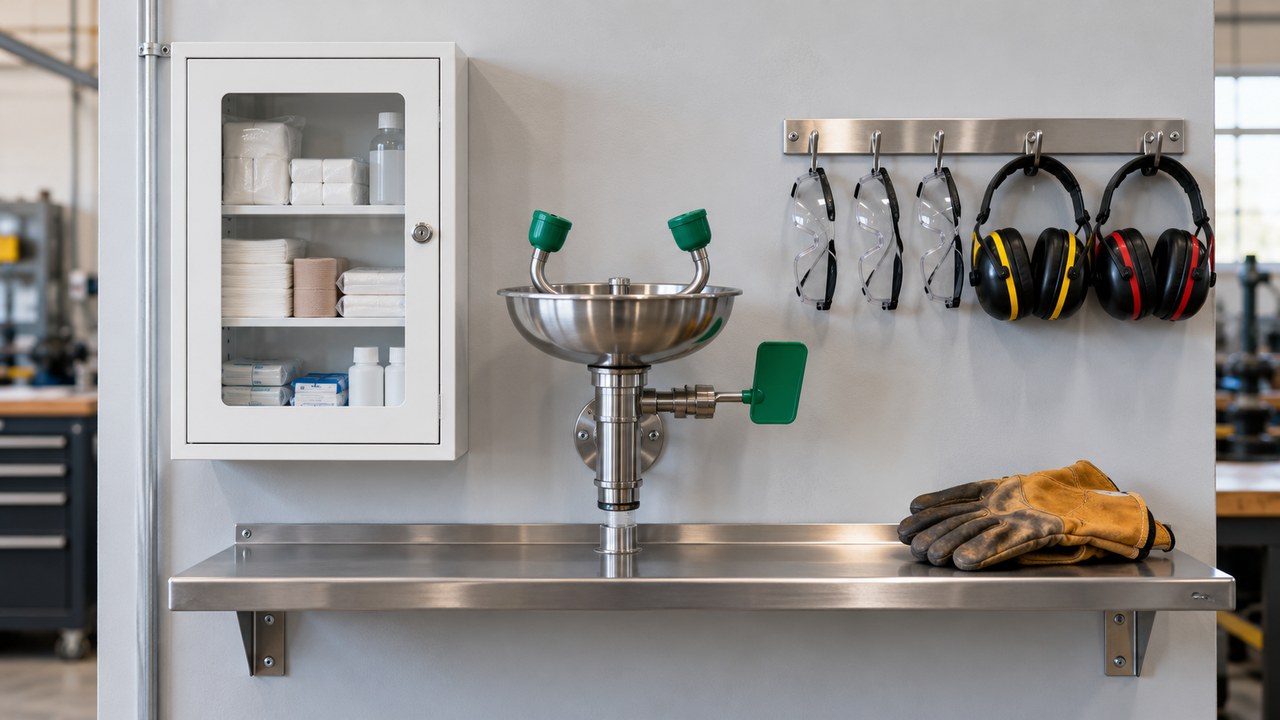
The cheapest workers' comp claim is the one that never happens. Written safety programs, regular training, equipment maintenance and a culture where employees report hazards early reduce injuries, protect your experience mod and can earn credits on your premium.
Safety does not need to be complicated to work. Start with the injuries your business actually has. A warehouse might focus on lifting technique and forklift traffic, a restaurant on burns and slips, and an office on ergonomics. Track near misses as well as injuries, because they point to the next claim before it happens.
The Department of Labor and Industry's certification program offers a 5 percent workers' comp premium discount, which can be earned annually, for employers with a certified workplace safety committee that meets the state's requirements. For many mid-size employers, that credit alone can justify the time a committee takes.
Our article on preventing workers' compensation claims offers practical steps for building a prevention program that fits a small or mid-size business.
A Berks County Example: A Growing Manufacturer
Consider a Berks County metal fabrication shop that grows from 12 to 30 employees in three years. As payroll grows and new hires join, its workers' comp program needs to change with it, or the shop pays more than it should.
At 12 employees, the owner bought a policy with an estimated payroll and rarely thought about it. Then the company won a large contract, hired 18 people over two years and added a second shift. At the next audit, actual payroll was far higher than the estimate, and the shop owed a substantial additional premium in one lump sum.
Two other problems surfaced. The new office manager and estimator had been placed in the same class as the shop floor, inflating the rate on their payroll. And a series of small hand and eye injuries during the hiring surge pushed the experience mod above 1.00.
Working with its agent, the shop corrected its class codes, began reporting payroll quarterly, launched a safety committee focused on new-hire training and personal protective equipment, and qualified for the state safety committee credit. Within two renewals, its mod was moving back below 1.00 and its premium matched its real risk.
Renewals, Remote Workers and Out-of-State Employees
A workers' comp policy should be reviewed every year, not just renewed. Changes in payroll, job duties, locations and remote work arrangements all affect coverage and price, and a renewal is the natural time to catch them.
Before renewal, update your payroll projections by class, review open claims with your carrier and ask whether your safety efforts qualify for any credits. Our guide to renewing your workers' compensation coverage offers practical tips for the renewal conversation.
Remote work adds questions many employers have not faced before. An employee injured at a home office may still be covered if the injury arises out of their work duties, and employees who live in another state may need that state listed on your policy. Our post on workers' compensation for remote employees explores those situations.
The same goes for employees who travel. A sales representative who regularly calls on customers in New York or Ohio, or a crew sent to a job in Delaware for several weeks, may trigger another state's rules. Listing those states on the policy before the work begins is far easier than sorting out coverage after an injury.
Frequently Asked Questions
How much does workers' compensation insurance cost in Pennsylvania?
Workers' comp cost depends on payroll, job classification and your experience mod, so it ranges widely. Low-risk office businesses may pay a small fraction of a percent of payroll, while high-risk trades such as roofing pay many times more. The most accurate figure comes from a quote built on your actual payroll by class code.
Can a Pennsylvania employer be exempt from carrying workers' comp?
Most cannot. Exemptions are limited to specific situations, such as certain corporate executive officers granted an exemption by the Department, members of certain religious groups, some domestic and agricultural workers and workers covered by federal programs. Having only part-time or seasonal staff does not create an exemption, and labeling workers as contractors does not either.
How long can an injured worker collect workers' comp in Pennsylvania?
Medical benefits for an accepted work injury generally continue as long as treatment is reasonable, necessary and related to the injury. Wage-loss benefits for total disability have no fixed end date, though the employer or insurer can seek to change or end them through the legal process. Partial disability benefits are limited to 500 weeks, according to the Department of Labor and Industry.
Can a business buy coverage through the State Workers' Insurance Fund?
Yes. The State Workers' Insurance Fund (SWIF) is a state-run insurer that writes workers' compensation for Pennsylvania employers, including those who have trouble finding coverage elsewhere. It pays the same statutory benefits as private carriers. Comparing a SWIF quote with private carrier quotes helps confirm you are getting a competitive price and the service you need.
Are part-time and seasonal employees covered by workers' comp?
Yes. Pennsylvania's requirement applies to part-time, seasonal and temporary employees just as it does to full-time staff, starting on their first day of work. Their payroll is included in your premium calculation and reconciled at audit. Workers placed by a staffing agency are usually covered by the agency's policy, but confirm that in your contract.
→ Protect Your Employees and Your Business
Workers' compensation is a legal requirement, but the right program does more than check a box: it controls costs, supports injured employees and keeps your business protected from lawsuits. American Insuring Group helps Pennsylvania employers compare workers' compensation coverage from a variety of competing insurance companies.
Ready to review your coverage or get a quote? Call our team today at (800) 947-1270 or (610) 775-3848, or contact us online.
David Ross writes about insurance for American Insuring Group, Ltd., an independent insurance agency in Shillington, Pennsylvania, that has served individuals and businesses across the state for over 30 years.