

The Cost of Substance Abuse in the Workplace
 The National Council on Alcoholism and Drug Dependence (NCADD) estimates that drug abuse in the workplace costs business owners $81 billion annually.
Studies show that substance abusers miss work more often, use more sick leave, and arrive late more frequently than their coworkers. Substance abusers are more likely to injure themselves or others and file more workers compensation insurance claims.
Double the Worker's Compensation Insurance Cost
It’s estimated that substance abusers cost employers twice as much in medical and workers compensation claims as their drug-free counterparts. And finally, substance abusers are considerably less productive than their drug-free co-workers.
Although Pennsylvania does not have a state law that regulates, requires, or prohibits drug testing or any drug-free workplace programs, companies that implement a drug-free workplace initiative can improve their bottom line, increase productivity, and develop healthier employees. A program may include supervisor training, employee education, drug testing, and/or an Employee Assistance Program (EAP).
The Cost of a Drug-Free Workplace Initiative
The cost of a drug-free workplace will vary depending on the size of your initiative, your response level, and available community, state, and federal resources. Costs may include policy development, employee education, management training, employee assistance, and drug testing.
However, a study of the economic impact of a drug-free workplace initiative in Ohio found significant improvements in job-related performance:
- A 91 percent decrease in absenteeism
- An 88 percent decrease in problems with supervisors
- A 93 percent decrease in mistakes in work
- A 97 percent decrease in on-the-job injuries
Risks of NOT Implementing a Drug-Free Workplace Initiative
The cost of implementing a drug-free workplace program should be weighed against the cost of not implementing a program. For many small businesses, one serious accident or one troubled employee can cost hundreds of thousands of dollars and jeopardize the future of that company.
How to Create a Drug-Free Workplace Initiative
- Drug-free workplace policy - Establish written policies and procedures that prohibit the abuse of alcohol or illegal use of drugs. Ensure that all employees and potential applicants read and understand the policy and that compliance with the policy is a condition of employment. The US Department of Labor has a “Drug-Free Workplace Policy Builder” at http://www.dol.gov/elaws/asp/drugfree/drugs/screen1.asp.
- Supervisor Training – Supervisors closest to the workforce should be trained on your drug free workplace initiative and their role in its implementation. They should also be taught the signs, symptoms, behavior changes, and performance problems associated with drug or alcohol abuse and what to do when they see those signs.
- Employee Education - An employee education session should describe the impact that alcohol abuse and drug use has on the workplace, provide information about addiction and the major drugs of abuse, and include your company’s drug and alcohol policies.
- EAP – An Employee Assistance Program is a worksite-focused program designed to identify and resolve productivity problems associated with personal problems, such as alcohol and/or drug abuse, which often includes counseling and referral programs.
- Drug Testing – A drug and/or alcohol testing program may detect or deter drug and/or alcohol use or abuse. Drug testing works best when used in conjunction with the other initiatives listed above.
Additional Resources:
Centers for Disease Control and Prevention- http://www.cdc.gov/workplacehealthpromotion/implementation/topics/substance-abuse.html
National Institute on Alcohol Abuse and Alcoholism - http://www.niaaa.nih.gov
National Institute on Drug Abuse – www.drugabuse.gov
Contact Us to Improve Your Bottom Line
 A drug-free workplace initiative can create a healthier workforce and improve your company’s bottom line, including lowering your workers compensation insurance claims and costs.
For more information about controlling your workers’ compensation insurance costs, contact us at (800) 947-1270 or (610) 775-3848.
 What About Dishonest Worker's Comp Claims?
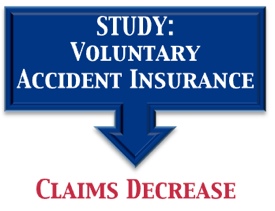 Workers’ Compensation claims cost American employers $77.1 billion in 2011. Traditionally, one of the only ways for employers to decrease workers’ compensation costs was to offer proactive safety measures to reduce the number of claims. This is still an important practice, but for years, many insurance agents have suspected that an employer offering voluntary accident or disability insurance will see a decrease in the frequency and expense of workers’ compensation claims.
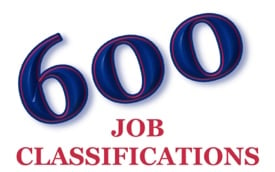 Worker's compensation insurance, job classifications, job risks and insurance premiums are all related. Job classifications, which are based on specific ratings and descriptions for all types of jobs, are determined by the National Council on Compensation Insurance (NCCI), the insurance industry’s ratings bureau. There are more than 600 different job classifications, and more are being added all the time, so it isn’t surprising that 30-35 percent of businesses have classification errors. But have you considered the potential impact on your business insurance costs that an erroneous job classification can bring?
 Don’t wait for your
 Following these tips will help ensure the safety of your employees and reduce workers’ comp claims; however, injuries may still happen.
  On March 25, 1911, the US witnessed one of the deadliest industrial disasters in American history – the Triangle Shirtwaist Factory Fire in New York City. The fire resulted in the deaths of 146 garment workers – 123 women and 23 men – who were working on the eighth, ninth, and tenth floors. Some died from the fire, but many were killed by smoke inhalation or falling or jumping to their deaths.
  Electrically-Related Worker's Comp Injuries
 Following these suggestions will help ensure the safety of your employees, reduce workers comp claims, and avoid fire-related business costs.
  Do you believe that your employees are one of your most valuable assets? Do you think of your employees as an investment rather than an expense?
  Contact American Insuring Group
 Be honest! Did you make any New Year’s resolutions this year? If you did, you weren’t alone. According to Statistic Brain, 45% of Americans “usually” make New Year’s resolutions, and according to Constant Contact®, 53% make business-related resolutions.
 Workers' Compensation Insurance and Minimum Wage Increases