
 You’re about to become an employer. Maybe you’ve been in business for a while, but now you’re ready to hire your first employee. You’re excited; this means your business is growing. Or, maybe you’re just starting a business and you need employees to help run that business.
Either way, being an employer comes with many responsibilities, including ensuring that you purchase the right business insurance. You may be asking yourself, “What insurance is required by law and what is optional? What’s in the best interest of both my business and my employees?”
There are four primary types of insurance every employer should take a look at – Workers Compensation Insurance, Unemployment Insurance Tax, Disability Insurance, and Health Insurance.
Workers’ Compensation Insurance
Workers Compensation Insurance coverage ensures medical and wage-loss benefits to employees who are injured on the job. Plus, it helps protect employers against lawsuits filed by injured workers. Worker’s Comp insurance requirements vary by state. In Pennsylvania, if you employ one or more employees - whether they’re part-time or full-time (including family members) workers’ compensation insurance coverage is mandatory.
If you are a sole proprietor, Workers' compensation insurance is not required by law, which can save you money; however, if you’re ever injured on the job, workers’ compensation insurance can help pay medical bills and supplement lost wages until you’re able to go back to work.
Click here for information about workers compensation insurance requirements in other states.
Unemployment Insurance Tax
Unemployment Insurance (UI) is a joint state and federal program financed through federal and state employer payroll taxes. It provides temporary payments to individuals who are unemployed through no fault of their own. Each state has its own unemployment insurance program, which includes additional eligibility requirements, but they all follow guidelines established by the federal government.
Most employers must pay federal employer payroll taxes if they pay employee wages of $1,500, or more, in a quarter or if they have at least one employee during 20 weeks in a calendar year. Most employers are also required to pay state unemployment taxes. In Pennsylvania, all employers providing employment to one or more workers must register Form PA-100 with the Office of UC Tax Services.
Employment that is not covered under the UC law includes the following:
- An individual employed by his or her son, daughter or spouse
- A child under the age of 18 who is employed by his or her parent
- A student in the employ of an organized camp that did not operate more than seven months in the preceding calendar year
Disability Insurance
Some states require that employers provide partial wage replacement insurance coverage to their eligible employees for non-work related sickness or injury. Currently, if your employees are located in any of the following states, you are required to purchase disability insurance:
- California
- Hawaii
- New Jersey
- New York
- Puerto Rico
- Rhode Island
In Pennsylvania, there are two types of disability insurance available if you decide to purchase it for your employees: short-term and long-term.
Again, if you are a sole proprietor, Disability Insurance is not required in Pennsylvania; however, if your family relies on your income, you may want to consider disability insurance for yourself to help pay medical bills and supplement lost wages if you become sick or injured.
Health Insurance
If you have more than 50 employees you are required to provide health insurance benefits to your full-time employees. If you have more than 50 employees and don’t offer health benefits, you may be subject to a penalty call the shared responsibility payment. 96% of employers in Pennsylvania are exempt from the shared responsibility requirement.
 Contact Us for All Your Business Insurance Needs
If you’re an employer, contact American Insuring Group at (800) 947-1270 or (610) 775-3848 for more information about required and recommended business insurance, including health insurance, disability insurance, workers compensation insurance, or any other insurance your business may need. We've been helping businesses like yours acquire affordable, high-quality insurance for over 25 years.
 Set the Standard
 You say you have good
  The inability to get the right care, from the right provider, at the right time is one of the leading causes of increasing medical costs.
  Contact Us for Workers Compensation Insurance Assistance
 Fraud, waste, and abuse continue to drive up the cost of administering workers’ compensation programs. Workers’ compensation fraud, which accounts for approximately one-quarter of all insurance fraud, comes in all forms: injury while off work, multiple claims, injury concurrent with termination, and many more.
  For additional methods to reduce the cost of workers’ compensation, including getting the best rate on quality workers comp insurance,
  Smart business owners know that insurance is important to protect their business and assets. But, knowing which ones are right for your business can be a challenge. No one wants to be caught without the right
  These five business insurance questions are a great starting point for any business owner, but you don’t need to go it alone. The advice of a trusted and experienced independent insurance agent from American Insuring Group can help ensure that you obtain the right insurance at the right price for your business.
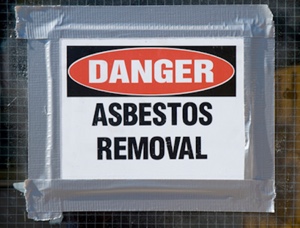
  Every employer is responsible for insuring a safe working environment for his or her employees. If you’re in construction, workplace safety should move to the top of your priorities because more than 20% of the work-related fatalities in 2013 occurred in the construction industry.
 On average, thirteen Americans are killed on the job every single day of the year and nearly 4 million workers are seriously injured on the job each year. Under the Occupational Safety and Health (OSH) Act, employers are responsible for providing a safe working environment. Furthermore, employers “MUST provide their workers with a workplace that doesn’t have serious hazards and must follow all OSHA safety and health standards.”
  Get the Right Workers Compensation Insurance Protection
 Managed health care started to become commonplace in the US after the enactment of the Health Maintenance Organization Act of 1973, which was created in an attempt to control health care medical insurance costs by stimulating greater competition within health care markets. It marked a significant shift in the US health care industry by introducing the concept of for-profit health care to an industry that was traditionally not-for-profit.
  For more information about MCOs and Worker’s Compensation Insurance and to find the right insurance for your business, please
 Contact us