

 Over 4,000 employees are injured, and another 325 die each year in workplace electrical accidents. Do not let this be one of your employees! Protect your employees and minimize your workers compensation insurance costs through proper safety procedures.
Downed electrical wires are one of the leading causes of electrical accidents, and most can be prevented. Being aware and well educated on how to handle these situations can be the difference between life and death!
Extreme Danger: Downed Power Lines
Workers involved in clean-up and recovery efforts are three times more likely, when compared to other occupations with electrical hazards, to be injured or killed by downed and low hanging electrical wires. These disaster scenes are usually very chaotic and uncontrolled, which can easily lead to mistakes and injuries. When first arriving at a scene, it is important to stop and look around, evaluate the situation and assess for any loose or low hanging electrical wires, quickly make a plan, and then proceed.
Safety Tips for Handling Downed Power Lines
Checking on equipment and electrical lines is the first step to ensuring safe working conditions for everyone involved in the effort. It should ALWAYS be assumed that all electrical wires are live and active!
- Downed and low hanging wires must always be considered active, regardless of whether or not they are touching the ground, because voltage may still be running through them and one touch could be deadly! Also keep in mind that all wires are designed differently and just because the wire is well insulated, coated, and weatherproofed does not automatically make it a television or cable wire. It could still be a high-voltage electrical wire.
- Always assume that all equipment, such as generators and conductors, are live even if they are not sparking or humming. Some of this equipment does not automatically turnoff when damaged, and a simple touch to the equipment or the ground around it could kill you instantly!
Energy that is provided through electrical wires is amazingly powerful! Therefore, its strength should never be tested.
- Never drive over power lines. You run the risk of becoming trapped in your vehicle or at the very least your vehicle could become entangled within the wire. This goes for any equipment vehicles you may be driving.
- If you are in a regular or equipment vehicle, and you were to come into contact with an electrical wire, ALWAYS assume it is live. Your best choice to resolve this situation is to remain inside your vehicle and place a call for help. If this is not possible, such as if your vehicle is on fire, you need to jump as far away as possible from the vehicle making sure NOT to touch the vehicle and the ground at the same time. Proper landing technique is with both feet together, maintaining good balance, and then continuing to shuffle away in small steps to eliminate the path of electric current, and ultimately electrical shock.
Backfeeding occurs when electrical conductors are unexpectedly energized by outside sources such as lightning, downstream events, generators, and circuit ties/switch points, which can result in additional injuries or death. Therefore, it is important to understand how voltages are spread and how to disable all electrical equipment properly and efficiently from the start.
- Proper lockout/tagout procedures ensure that all necessary energy sources have been properly disabled and do not pose a threat of being reignited due to unexpected circumstances such as lightning or generator reboots.
- Since electricity spreads outward, in a circular motion throughout the ground, when you move outside of the main point of contact, you can be creating larger, more dangerous voltages. This creates a hazardous situation for yourself and anyone else standing close to you.
Keeping Business Insurance Costs in Check
Safety should be your number one priority for the safety of your employees and as a means to keeping insurance costs – health insurance, workers compensation insurance, liability, and disability insurance – in check. Sharing this information with employees who respond to a clean-up or recovery effort could save a life and help your company’s bottom line.
Contact Us
For more information about saving on all your commercial insurance costs, please contact us online or give one of our experienced agents a call at (800) 947-1270 or (610) 775-3848.
 Need something to jolt you awake faster than your morning espresso? Try these government statistics: About 70 percent of people over age 65 will need some type of long-term care during their lifetime, and more than 40 percent will need care in a nursing home at some point.
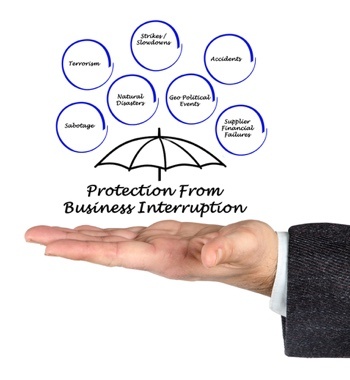 A recent national survey of small businesses yielded some sobering statistics. It found that 66 percent of these businesses do not have business interruption insurance—even though an estimated 25 percent of them will not be able to reopen following a major loss, such as a fire, a break-in, or a storm.
 Employees who are injured on the job may be entitled to compensation for medical care and wage replacement through their employer’s
 For construction workers and others whose jobs require them to be outside, winter means a few months of extreme cold and challenging days, during which they will be susceptible to cold-related injuries.
 Click here to contact us
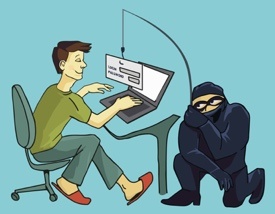 Today’s businesses cannot operate without the aid of technology. Most companies do a significant portion of their business interactions online, and they are storing more sensitive information on their computers than ever before.
 Life insurance offers the peace of mind of knowing your family will have a financial safety net if you’re no longer there to provide one. While most people think obtaining coverage is as simple as filling out a few forms, that’s not always the case.
 Knowledge is power, so find out why you were denied. Then, straighten out all of your records and work with an experienced independent life insurance agent to obtain the coverage you need.
 Medicaid is an entitlement program, jointly funded at the state and federal levels, which provides healthcare--both medical and long-term custodial care--to the poorest population of the United States. Not to be confused with Medicare, the federally funded program available to most U.S. citizens and permanent legal residents who are age 65 or older, eligibility for Medicaid is means-based, and the program has strict income eligibility requirements that vary from state to state.
 When one of your employees is injured on the job, it sets off a sequence of procedures that must be adhered to in order to protect your business. If a claim is filed--whether compensable or contested—it is imperative that you have the necessary documents on file. Documentation for
  Click here to contact us
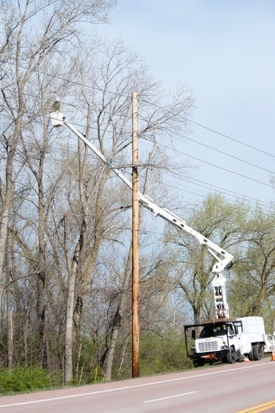 The storm was ferocious. Luckily, your buildings were spared damage from the high winds and heavy rains; however, a few miles away the storm brought down power lines that supply your business with electricity. While there is no physical damage to your property, you’re still out of business without power. Does your