Get the Most from Your Employer Health Care Program
 With the end of the year fast approaching, many employees are starting to become anxious. It’s that time of year again, the time when they get to tweak their health insurance benefits. While this may be exciting to some, the responsibility to choose the right health insurance plan can be a source of tension for others.
There are many reasons for this. Personal circumstance comes into play, including additions to family. Since the days when employers offered either a low-cost HMO or an expensive PPO, the maze of health insurance options has increased significantly. With health insurance costs on the rise, it’s more important than ever to make sure you are getting the most coverage for your money.
Here are 5 mistakes to avoid in an open enrollment benefit session:
Mistake #1- Saying No to Health Savings Accounts
Less than 20% of those given the option of opening a Health Savings Account choose to take advantage of this potentially valuable opportunity. If you break it down, these turn out to be the equivalent of free money, and can really give you a leg up towards paying for medical expenses.
Mistake #2- Picking the Cheapest Health Insurance Premium
It’s easy to look at a low cost and choose the cheapest health insurance plan because we may think it's all we can afford. What many fail to realize, however, is that low-cost health insurance premiums often offer significantly less coverage. This could lead to big trouble in the long run if your health care needs outweigh the coverage available.
Mistake #3- Not Doing Your Health Insurance Research
Nine out of ten people renew their old health insurance plans for the upcoming year. This isn’t always a bad thing, such as when your needs haven’t changed and you’ve researched the available options. However, even if your health insurance needs are the same as they were last year, review the plans available to make sure that nothing has been changed on their end. Benefits and premiums may not be the same as last year, so make sure that you know exactly what you’re signing up for.
Mistake #4- Under-Buying
Under-insuring is one of the worst mistakes you can make, as once you’ve signed into a health insurance plan, you’re locked into it either until there is a change in family demographics or open enrollment comes up again. That’s it. There’s no in between. It would be nice to think that by the time you need it, you’ll have thrown enough money into your Health Savings Account to cover the cost of the premium, but there’s no guarantee. You could find yourself paying a large sum out of pocket.
Mistake #5- Over-Buying Health Insurance Coverage
Throwing a high premium at the possibility of a life altering health-related disaster may provide you with quite a safety net, but financially it could turn out to be an unwise move. This is not to say that choosing the cheapest health insurance plan is always the best option for an individual with a clean bill of health, as we are all at risk for accident or unexpected illness. Finding something in the middle is ofen sufficient. Consider a high deductible with a limited network to keep premium costs low while providing coverage against a major health care expense.
Yes, open enrollment can be a source of tension, but if you play it right, as most people don’t, you’ll find that next year’s open enrollment isn’t the confusing maze that some make it out to be. Open enrollment for health insurance coverage is there to give you options that can help you. Don’t pass up a good opportunity to make a smart move.
Do you need personal health insurance, or better health insurance for your employees?
We can help. Please contact us today: 800-947-1270

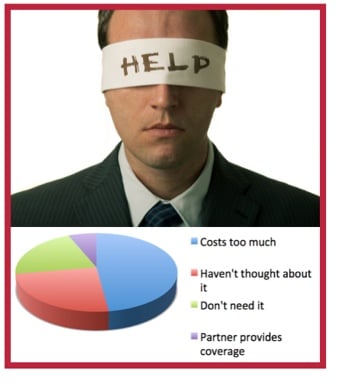 Life insurance coverage might not be the first thing you think of when considering your financial planning. However, it is an extremely important component of that planning. If the unexpected happens, the people you leave behind could be left with the very same financial hardships you’ve been working so hard to prevent, especially if you haven't put the proper life insurance in place. Sadly, as you'll see from the data below, most people fall into one of two categories: uninsured or underinsured.

 For most small businesses, workers compensation insurance costs can eat up a fair percentage of their income. While this type of coverage is essential, especially for riskier professions, there are a few ways to minimize your workers comp insurance expenditures without sacrificing the level of coverage necessary for your enterprise.
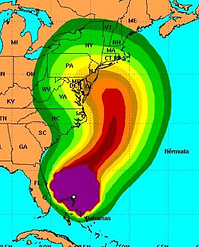 According to WFMZ-TV: "
 Not really. Anyone can apply to insure a commercial vehicle, (for example, a van), but they will find they are restricted when it comes to personal or private use of that vehicle. As long as the vehicle falls under commercial use, like delivering goods or providing a service (say, if the owner is a builder just using the van to get from A to B) then it is much easier to obtain insurance than if the applicant also wanted the vehicle for private use.

 Purchasing workers compensation insurance can be a potential minefield for some businesses, who often don’t know where to start and can feel like they’re going in blind without a workers comp specialist to guide them along the way. It can seem like a daunting, upward struggle, especially since some insurance companies and agents won’t even consider writing workers compensation insurance – and they have their reasons - but with the right insurance broker, applicants can get through the process scratch-free.

 A section of The Affordable Care Act requires health insurance providers to spend at least 80 percent of dollars they receive from premiums on patient care, or be forced to send a rebate to patients. This may seem like a good deal for patients, but health economists say the provision can only lead to more expensive insurance.

 When looking into insuring a company car, van, or pickup, you will find commercial vehicle insurance and regular auto insurance are entirely different animals. But although the products available differ greatly, the basic principles apply when it comes to finding the best policy for a particular small business – be it auto insurance for a private, or commercial vehicle.

 Many businesses are dependent on their stock; without inventory, there can be no sales, and without sales, there is no income, so insuring one's inventory can be critically important. Depending on the type of business, a wide array of products and quality stock could be at risk from unforeseen disasters such as fires or flooding. So, it makes good sense to take out a commercial property insurance policy covering the entire range of your inventory.
 In a nutshell, it’s a type of insurance policy used to cover a commercial property, which spans a broad spectrum of business environments and situations.